

Last Wednesday, I opened my pantry after a long day and spotted a package of linguine next to some ground beef in the fridge. Within minutes, I had these Mongolian Ground Beef Noodles bubbling away on the stove, and honestly, the smell alone was worth it. This recipe became my new favorite because it delivers that perfect balance of sweet and savory without requiring a trip to specialty stores. The glossy sauce clings to every strand of pasta, and you can have dinner on the table faster than most takeout deliveries.
What makes this dish so brilliant is how accessible it is. No exotic ingredients, no complicated techniques, just straightforward cooking that yields restaurant-quality results.
Building Your Ingredient List
The beauty of these Mongolian Ground Beef Noodles lies in their simplicity. Most of these items probably live in your kitchen already, which makes this perfect for those nights when grocery shopping feels impossible.
- 1 pound ground beef (80/20 blend works best)
- 10 ounces linguine or spaghetti
- 5 cloves garlic, minced
- 1/3 cup brown sugar
- 1/3 cup low-sodium soy sauce
- 3 tablespoons hoisin sauce
- 1/4 cup beef broth
- 1 tablespoon cornstarch
- 2 tablespoons water
- 1/2 teaspoon ground ginger
- 1/2 teaspoon black pepper
- 1/4 teaspoon red pepper flakes (optional)
- 4 green onions, sliced
- Sesame seeds for garnish (optional)
The Secret to Perfect Sauce
The magic of this recipe happens in that gorgeous, glossy sauce. Unlike stir-fries that can turn out watery or bland, this one uses a strategic combination of ingredients that creates depth without overwhelming your taste buds. Brown sugar brings sweetness that balances the salty soy sauce, while hoisin adds an earthy richness that makes everything taste more complex than it actually is.
The cornstarch slurry is your secret weapon here. Mixing it with cold water before adding it to the hot pan prevents lumps and creates that restaurant-style glossy coating. Don’t skip this step, or you’ll end up with thin, runny sauce that slides right off your noodles.
Step-by-Step Cooking Process
Start by getting your pasta water boiling. Salt it generously, then cook your linguine according to package directions until al dente. Drain and set aside, reserving about half a cup of pasta water just in case you need to loosen the sauce later.
While the pasta cooks, heat a large skillet over medium-high heat. Add the ground beef and break it apart with a wooden spoon. Cook for about 6 to 8 minutes, stirring occasionally, until the meat browns completely and develops those tasty crispy bits. Drain off most of the excess fat, leaving just a tablespoon or so for flavor.
Toss the minced garlic into the beef and stir constantly for about 30 seconds until it becomes fragrant. This timing is crucial because garlic burns quickly and turns bitter if you leave it too long.
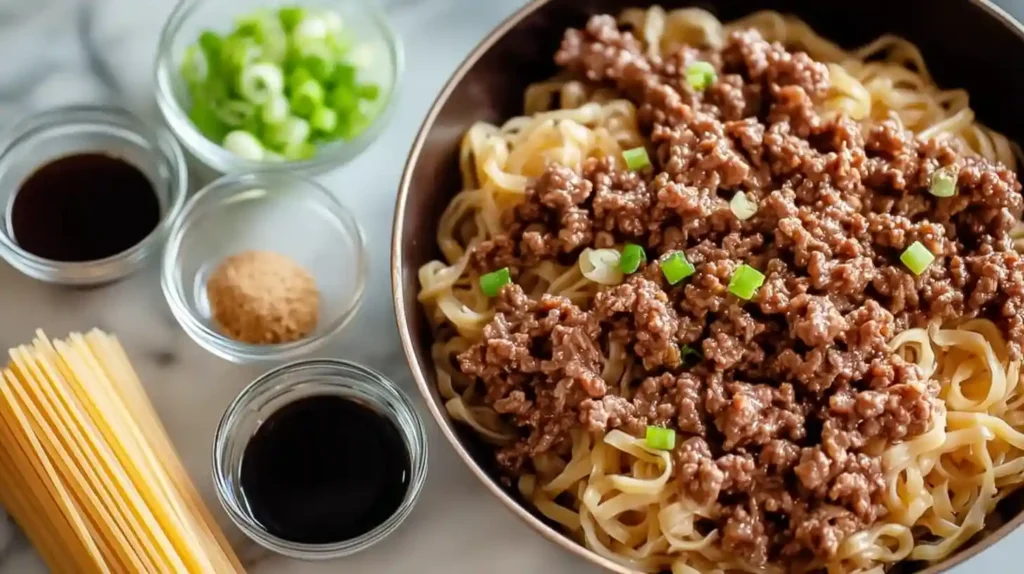
Now comes the fun part. Add the brown sugar, soy sauce, hoisin sauce, beef broth, ginger, black pepper, and red pepper flakes if using. Stir everything together and let it bubble gently for about 2 minutes. The sugar will melt and the flavors start melding into something incredible.
In a small bowl, whisk together the cornstarch and cold water until smooth. Pour this mixture into the skillet while stirring constantly. The sauce will thicken within about a minute, transforming from thin and drippy to luxuriously glossy. Add your cooked noodles directly to the pan and toss everything together using tongs until every strand gets coated in that beautiful sauce.
Creative Twists and Swaps
Ground turkey or chicken makes an excellent lighter alternative if beef isn’t your thing. The cooking time stays the same, though you might want to add a splash of oil since leaner meats release less fat. For a plant-based version, crumbled extra-firm tofu or plant-based ground meat works surprisingly well.
Don’t have hoisin sauce? Mix together 2 tablespoons soy sauce, 1 tablespoon peanut butter, 1 teaspoon brown sugar, and a tiny drop of sriracha. It won’t be identical, but it gets you close enough. Rice noodles, udon, or even ramen noodles can replace the linguine depending on what’s in your pantry.
Want to sneak in vegetables? Thinly sliced bell peppers, snap peas, shredded carrots, or broccoli florets all work beautifully. Add them after browning the beef and before adding the sauce, giving them 3 to 4 minutes to soften slightly.
Common Mistakes to Avoid
Overcooking the noodles is the biggest rookie error. They’ll continue cooking slightly when you toss them with the hot sauce, so aim for just barely al dente. Mushy noodles ruin the whole texture of this dish.
Another pitfall is using regular soy sauce instead of low-sodium. The sauce already has plenty of salt from the hoisin and beef, so regular soy sauce can make everything taste like a salt lick. If you only have regular soy sauce, cut the amount by half and taste before adding more.
Don’t let the sauce reduce too much before adding the cornstarch slurry. If it gets too thick, thin it out with a splash of that reserved pasta water or a bit more beef broth.
Serving Suggestions
Garnish these Mongolian Ground Beef Noodles generously with sliced green onions and a sprinkle of sesame seeds if you have them. The fresh bite of the green onions cuts through the richness perfectly.
Serve this as a complete one-bowl meal, or pair it with a simple cucumber salad dressed in rice vinegar for contrast. Steamed edamame or Asian-style slaw also make excellent sides. If you’re feeding a crowd, double the recipe because this disappears fast.
Storing and Reheating Tips
Leftovers keep well in an airtight container in the refrigerator for up to 3 days. The noodles will absorb some sauce as they sit, so don’t be surprised if they look a bit drier the next day. When reheating, add a splash of water or beef broth to bring back that saucy consistency.
Reheat gently on the stovetop over medium-low heat, stirring frequently until warmed through. Microwaving works too, just use 50% power and stir every minute to prevent hot spots. The texture won’t be quite as perfect as fresh, but it’s still delicious.
The beef mixture freezes reasonably well for up to 2 months, though I recommend cooking fresh noodles when you’re ready to eat rather than freezing the whole dish. Noodles get mushy when frozen and thawed.
FAQ
Can I make this dish gluten-free?
Yes! Use gluten-free pasta and replace the soy sauce with tamari or coconut aminos. Make sure your hoisin sauce is also gluten-free, as some brands contain wheat.
How spicy are these noodles?
The base recipe has minimal heat. The red pepper flakes are optional and add just a subtle warmth. If you want it spicier, add more red pepper flakes or a drizzle of sriracha when serving.
What’s the best type of pasta to use?
Linguine works perfectly because its flat shape holds the sauce well. But spaghetti, fettuccine, or even rice noodles all work beautifully. Just match the cooking time to whatever pasta you choose.
Can I prep this ahead for meal prep?
Absolutely! Cook the beef mixture and store it separately from freshly cooked noodles. Combine and reheat when ready to eat. This stays fresh for 3 to 4 days in the fridge.
Why did my sauce turn out watery?
Either the cornstarch wasn’t mixed properly before adding, or you didn’t let it simmer long enough to thicken. Make sure the cornstarch is completely dissolved in cold water and let the sauce bubble for at least a minute after adding it.
Is this recipe kid-friendly?
Very much so! The sweet-savory flavor appeals to most kids. Skip the red pepper flakes to keep it mild, and let them help sprinkle the green onions on top for fun.
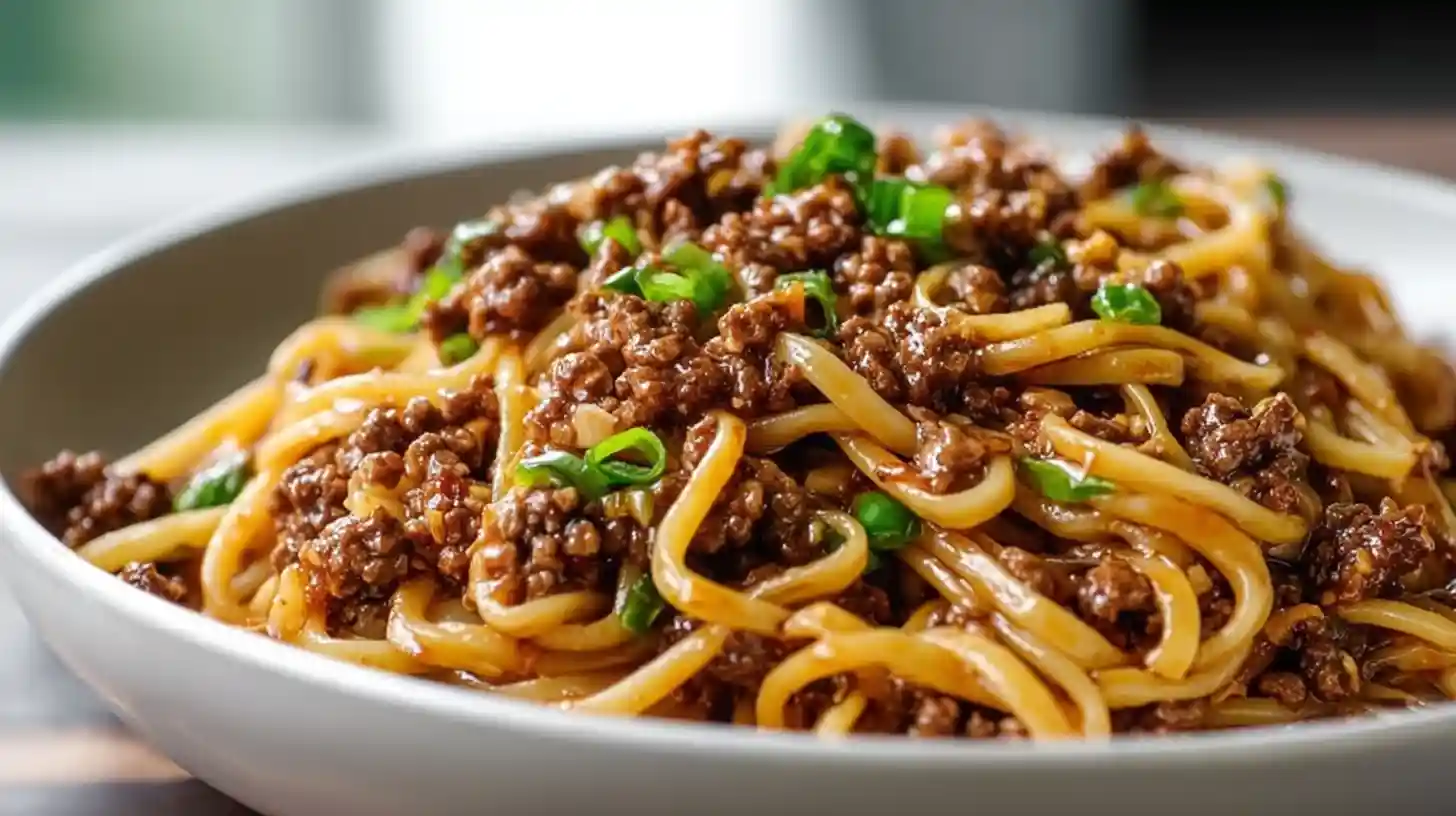
Mongolian Ground Beef Noodles
Ingredients
Equipment
Method
- Cook the pasta according to package directions in salted boiling water until al dente. Drain and set aside, reserving 1/2 cup pasta water.
- Brown the beef in a large skillet over medium-high heat for 6-8 minutes, breaking it apart as it cooks. Drain excess fat, leaving about 1 tablespoon.
- Add garlic to the beef and cook for 30 seconds, stirring constantly until fragrant.
- Mix in seasonings by adding brown sugar, soy sauce, hoisin sauce, beef broth, ginger, black pepper, and red pepper flakes. Stir and simmer for 2 minutes.
- Thicken the sauce by whisking cornstarch with water in a small bowl, then stirring it into the skillet. Cook for 1 minute until sauce becomes glossy and thick.
- Combine with noodles by adding cooked pasta to the skillet and tossing with tongs until evenly coated.
- Garnish and serve immediately with sliced green onions and sesame seeds.
Notes
- Use low-sodium soy sauce to control saltiness.
- Cook pasta just to al dente as it continues cooking in the sauce.
- Mix cornstarch completely with cold water to prevent lumps.
- Add vegetables like bell peppers or broccoli after browning beef.